
Beyond the Gift Card: What Really Motivates Survey Participants
June 26, 2026
AI, Fireworks, and Fraud
June 30, 2026
Market research teams and business owners are rethinking how they design online surveys as AI-generated visuals become mainstream tools in concept development. Instead of waiting days or weeks for custom creative, researchers can now generate realistic product mockups, packaging variations, and ad visuals in minutes and test them immediately.
This shift is not just about speed. It’s reshaping how quantitative research supports early-stage creative decisions, reducing friction between idea and validation.
In a Nutshell
- AI-generated visuals let researchers test more ideas, faster.
- Concept testing, packaging research, ad evaluation, and product visualization all benefit from rapid visual iteration.
- Costs drop because teams no longer need a designer for every variation.
- Data quality depends on careful stimulus design and transparency.
- Early-stage creative development is becoming more experimental and more data-driven.
From Static Stimuli to Iterative Design
Problem: Traditional visual stimulus creation is slow and expensive.
Solution: Generate and refine visuals in-house, on demand.
Result: More variations tested, earlier in the innovation cycle.
In the past, testing five packaging concepts might require multiple design rounds, agency coordination, and budget approvals. Now, researchers can generate dozens of structured variations, color palettes, claims, imagery styles, and narrow the field before investing in final creative.
This fundamentally changes the role of surveys. They are no longer just validation tools at the end of creative development. They become iterative design engines.
Where AI Visuals Are Making the Biggest Impact
AI-generated imagery is already influencing several core research applications:
- Concept testing: Rapidly visualize abstract ideas so respondents react to something concrete rather than a text-only description. Register here
- Packaging research: Test label claims, layout options, sustainability cues, and shelf impact simulations.
- Ad evaluation: Explore multiple headline-image combinations or scenario-based ad executions within a single study.
- Product visualization: Create realistic depictions of products that do not yet exist, including niche or futuristic concepts. Register here
In each case, the gain is optionality. More variations can be explored without multiplying cost.
Text-to-Image Tools as Practical Research Assets
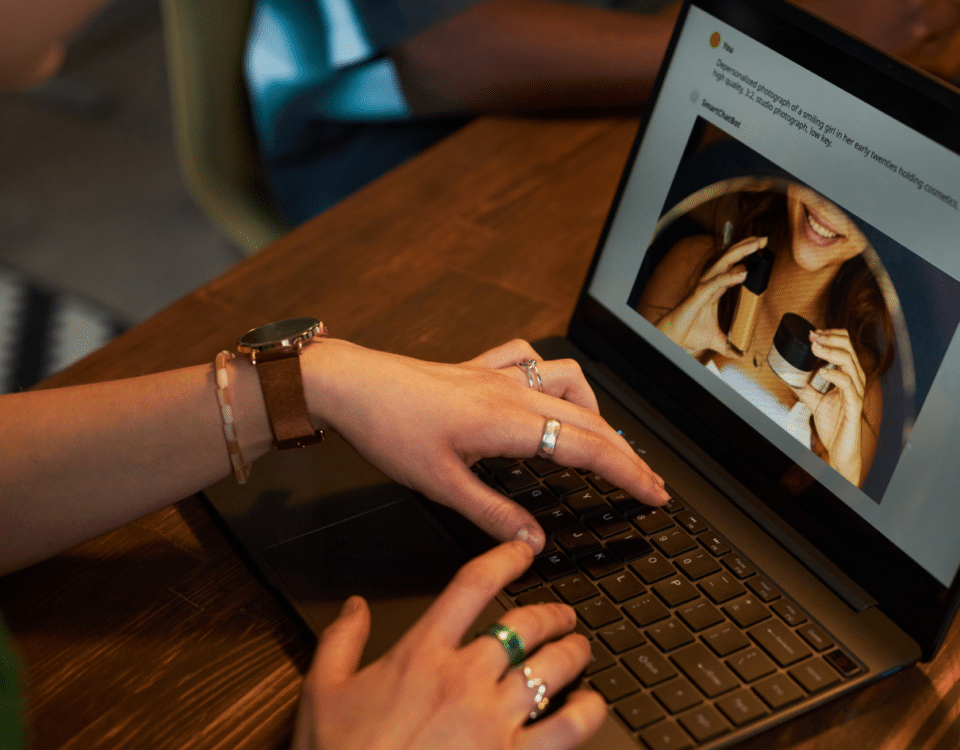
Text-to-image platforms have matured into genuinely useful additions to the market researcher’s toolkit. With an AI image generator, teams can describe the product concept, visual style, or packaging variation they want to test and instantly produce ready-to-use imagery.
This makes it feasible to run concept testing rounds that include multiple visual executions in one survey—without extending timelines or budgets. Today’s tools are capable enough to support real-world research needs, from generating early-stage product mockups to producing stimulus imagery for niche audiences where stock photography falls short. Instead of hunting for the “closest available image,” researchers can create exactly what the test requires.
Speed and Cost: The Operational Advantage
Here’s how the economics change:
| Traditional Approach | AI-Generated Visuals |
| Designer or agency required for each variation | In-house generation of multiple options |
| Longer timelines between draft and test | Same-day creation and deployment |
| Higher marginal cost per concept | Near-zero cost per additional variation |
| Fewer ideas tested | Broader exploration before narrowing |
For business owners, this means earlier signals on product-market fit. For research teams, it means more ambitious experimental design within fixed budgets.
A Practical Framework for Using AI Imagery in Surveys
To use AI-generated visuals responsibly and effectively, researchers should follow a structured process:
Step-by-Step Checklist
- Define the learning objective clearly.
Are you testing appeal, clarity, differentiation, or purchase intent? - Standardize what varies and what does not.
If testing packaging color, keep claims and layout consistent. - Pre-test visual realism.
Confirm respondents perceive the image as credible and not distracting. - Document stimulus origin.
Note internally that visuals are AI-generated, especially for regulated categories. - Compare against a benchmark.
Include at least one “control” concept to calibrate responses. - Interpret with caution.
Remember respondents react to both the idea and the execution quality.
This discipline ensures the benefits of speed do not compromise methodological integrity.
Methodological and Data Quality Considerations
AI-generated visuals introduce new design questions:
- Realism bias: If an image looks overly polished or slightly artificial, it may influence ratings.
- Execution vs. idea confounding: Are respondents reacting to the concept itself, or to how well the AI rendered it?
- Expectation effects: If visuals imply a feature not described in text, results may skew.
Researchers should mitigate these risks by aligning text and visuals tightly, pretesting stimuli, and avoiding unintended visual cues. Transparency with internal stakeholders is also critical. Visuals are tools for testing direction, not final creative assets.
How This Is Reshaping Early-Stage Creative Development
AI-generated imagery is pushing quantitative research earlier into the creative process.
Instead of handing off polished designs for validation, teams can:
- Prototype loosely defined ideas.
- Eliminate weak directions before investing in professional design.
- Use survey data to inform creative briefs.
In practical terms, research becomes a filter for exploration rather than a gatekeeper at the end. Creative and research teams collaborate sooner. Business owners gain faster feedback loops.
The result is a more agile innovation cycle: idea → visualize → test → refine → repeat.
Additional Resource: Authoritative Guide to Concept Testing
For market researchers looking for a reliable, practical overview of concept testing best practices, including how to structure tests, measure reactions, and apply insights, our guide is a solid resource.
Frequently Asked Questions
Are AI-generated visuals reliable for quantitative testing?
Yes, when used carefully. They are effective for directional testing and early-stage evaluation, provided realism and execution consistency are managed.
Do respondents react differently to AI-generated images?
Most respondents focus on the concept being presented. However, noticeable visual artifacts can influence perception, so pretesting is recommended.
Should AI visuals replace professional design?
No. They are best suited for exploration and iteration. Final creative assets should still be professionally refined.
Can small businesses benefit from this approach?
Absolutely. AI visuals lower the barrier to running structured concept tests without large creative budgets.
Conclusion
AI-generated visuals are changing how market researchers design and execute online surveys. By lowering the cost and time required to create high-quality stimuli, they enable broader experimentation and faster learning.