

To Scroll or Not To Scroll, That is the Question
September 28, 2026
In June of 2026, THe NCAA adopted a new athlete eligibility model called “Five-for-Five.” With this new model, athletes can now compete for up to five years, instead of being limited to four seasons within a five-year period. The five-year window generally starts when they enroll full-time in college or when they reach a certain age. This new model hopes to simplify the redshirt and eligibility question that hung over the previous model.
We wanted to get a feel for what consumers thought about these changes, so in our recent round of research-on-research, we asked. Let’s dive into what we uncovered.
Overall
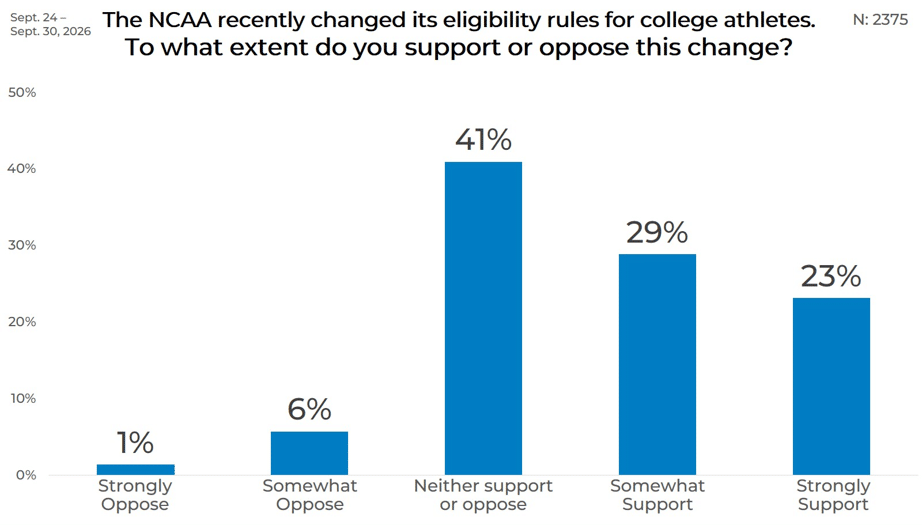
Overall, 52% of consumers supported the NCAA eligibility change. Opposition was much less common, with 6% somewhat opposed and 1% strongly opposed.
A sizable 41% neither supported nor opposed the change, making neutrality the largest single response category.
Gender
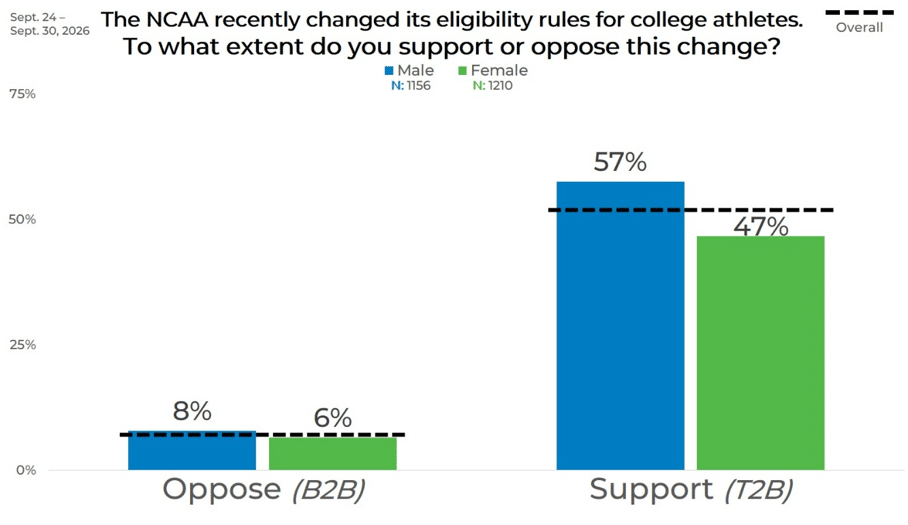
When we segmented the data by gender, we see that support for the eligibility model change was higher among men than women, while opposition was roughly the same.
Opposition was relatively low for both men and women. Eight percent of men opposed the change, compared with 6% of women, a much smaller difference than the gap seen in support.
Age
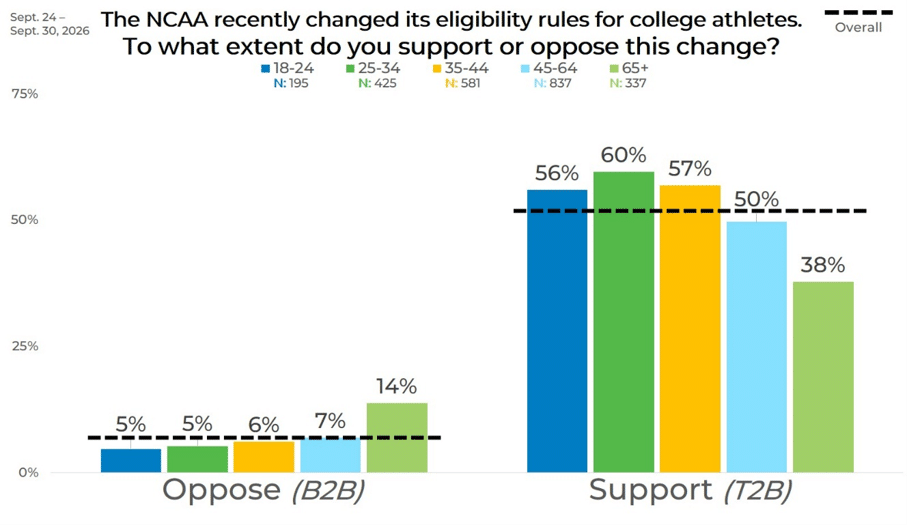
Breaking down the data by age revealed a clear trend: support for the eligibility change declined with age. We see support drop by 22 points, from a high of 60% to just 38%.
Opposition was fairly static across most age groups, except those 65 and older, where it was more than double any of the other age groups.
Income
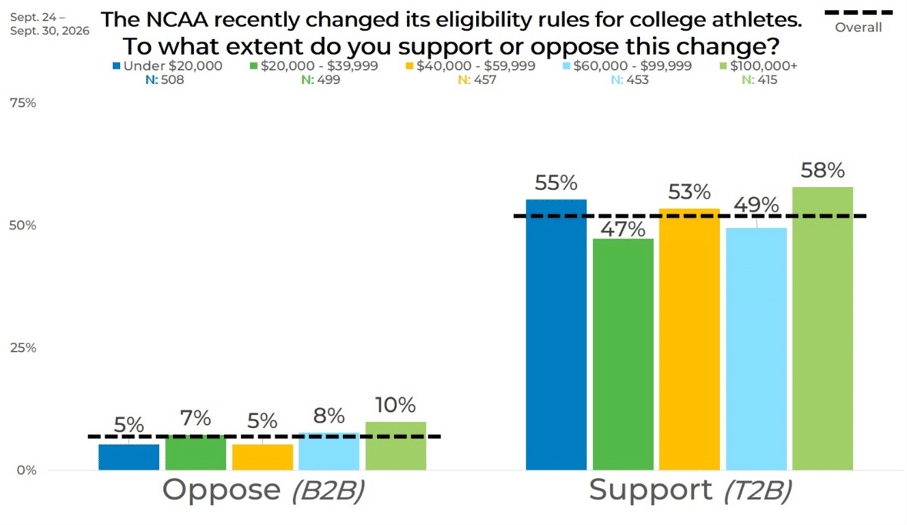
When we looked at the data by income, support ranged from 47% to 58%, an 11-point difference between the lowest (those making $20,000 to $39,999) and highest (those making $100,00+).
Of those who oppose the change, there is only a 5 point gap between the highest and lowest.
Political Affiliation
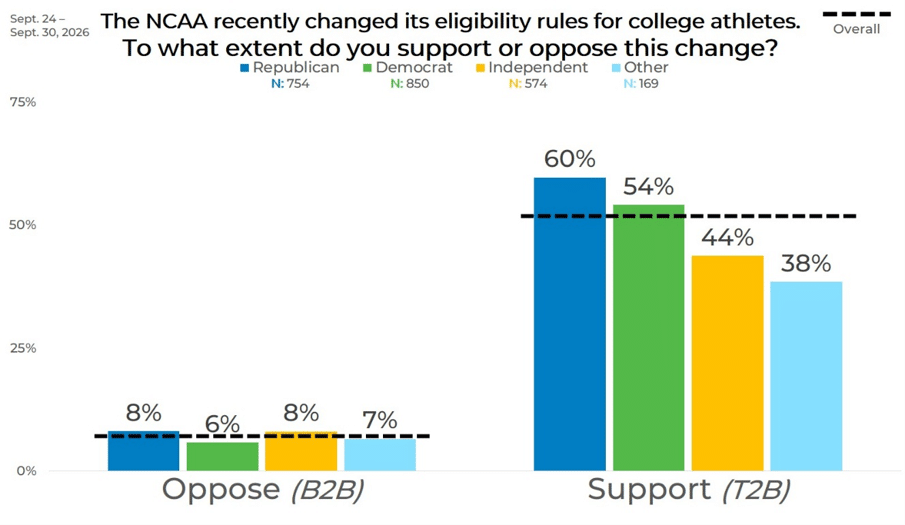
When looking at the data by political affiliation, opposition to the eligibility change was fairly consistent. Support, on the other hand, is a different story. Republicans support the change 6 points higher than Democrats, and 16 points higher than Independents.
Ethnicity
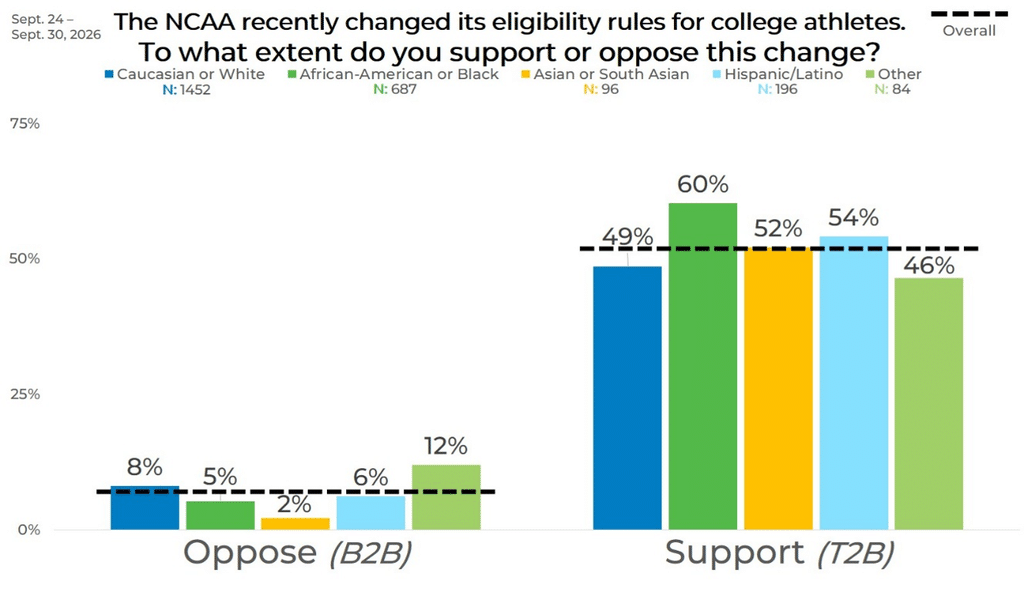
African American respondents showed the highest support for the eligibility change at 60%. This was 11 points higher than among Caucasians, who supported the change by only 49%.
Panel
When we segment the data by panel source, we found significant differences. Panel N had the highest level of support at 66%, where Panel I had the lowest at 36%, a 30-point difference.
The differences in opposition were similar but not as stark. Panel I had the highest level at 13%, nearly double that of any other panel.
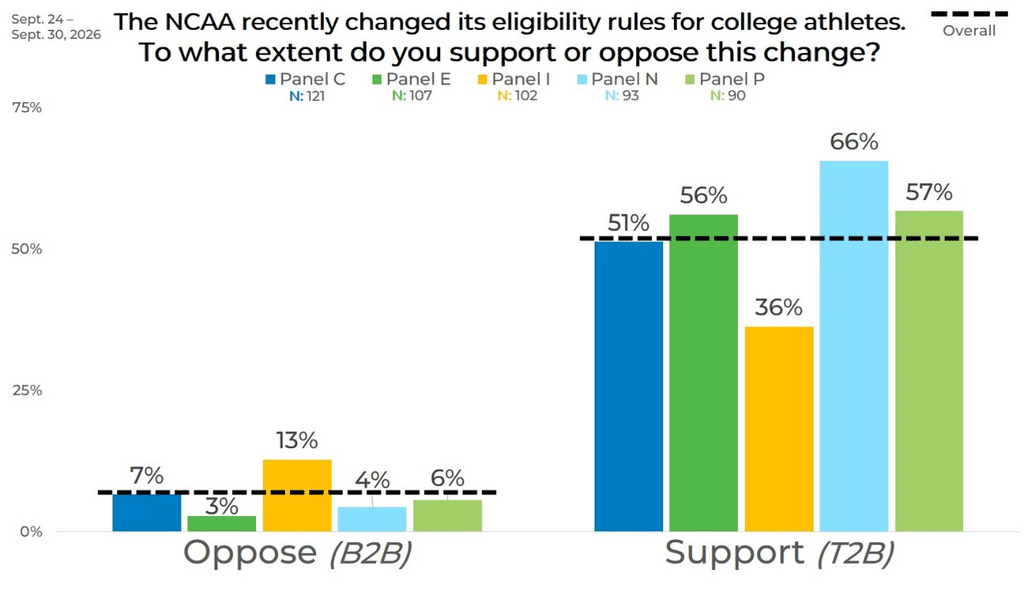
This data highlights the need to strategically blend sample for your studies to mitigate panel bias. Otherwise, you can end up making the wrong decision, which costs time and resources.
Learn how EMI can help you on your next study. Click the button below to request a consultation.