
Modeled Communities: The Synthetic Respondents That Don’t Replace Humans with Dan Braker of Breakthrough Research
October 8, 2026
Dolly Parton Did It All. But What Will We Remember Most?
October 14, 2026
One of the biggest stories leading up to the start of the 2026 college football season wasn’t about which teams were favored to make the playoff; it was about player eligibility. Specifically, whether players who had signed professional contracts but didn’t make the team could return to play for a college team. Lane Kiffin and the LSU Tigers became the poster children for this debate, as they had 3 players they were potentially going to add to their roster who had previously signed professional contracts. The NCAA and the individual conferences made their positions known, courts got involved, and the final decision came down to the wire.
With this in mind, we wanted to gauge how US consumers felt about this topic, and whether athletes who had left college and become professionals, including by signing a professional contract, should be able to return and compete in college athletics if they still meet current academic and eligibility requirements.
Let’s dive into the results from our latest wave of research-on-research and see what consumers said.
Overall
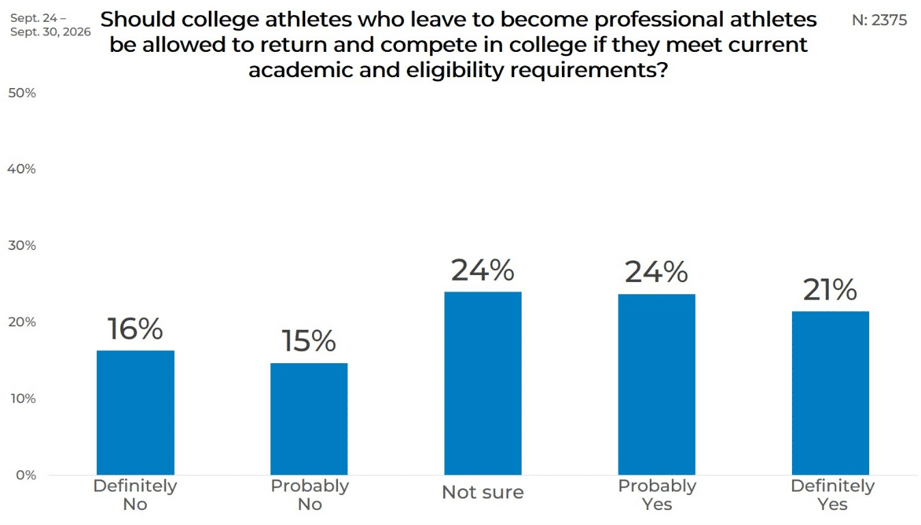
Overall, 45% of respondents said college athletes who turned professional should be allowed to return to collegiate competition if they meet current requirements, compared to 31% who said they shouldn’t be able to return.
Gender
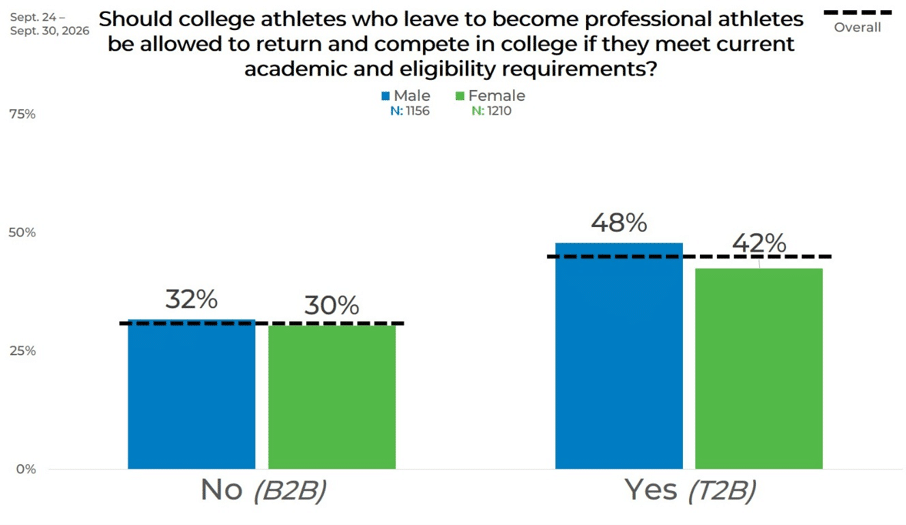
When we segmented the data by gender, we found that men were only slightly more likely than women to support allowing former professional athletes to return to college competition.
Opposition to professional athletes returning to college to compete was fairly even across men and women.
Age
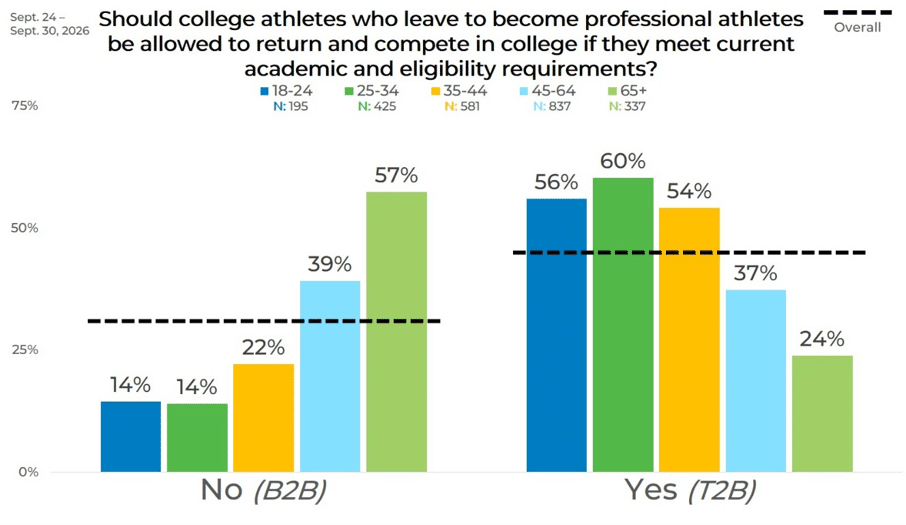
A clear pattern emerged when we looked at the data by age. The share of consumers who don’t support professional athletes returning to compete in college rises with age, from 14% to 57%. We see the opposite pattern among those who do support professional athletes returning to college to compete. The number of consumers who support it drops from 60% among those aged 35-34 to 24% among those aged 65+.
Income
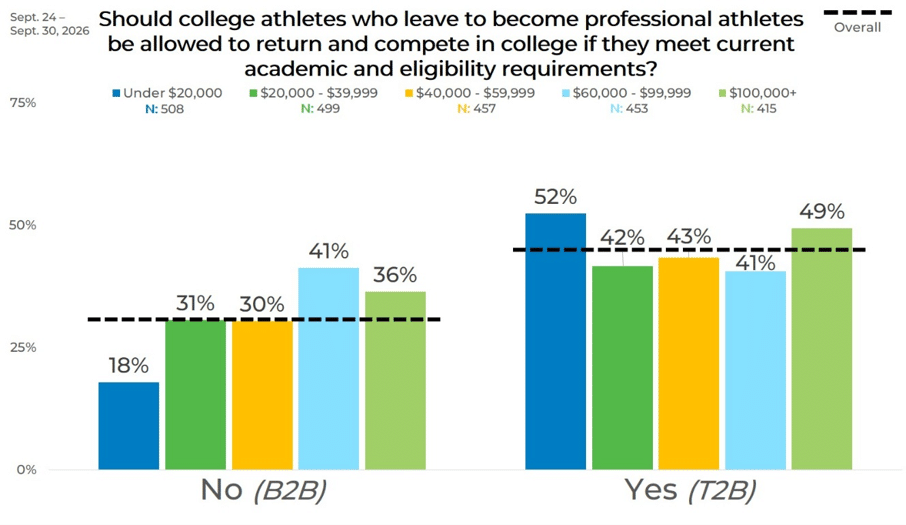
There was some variation in the results when we looked at them by income level. The number of respondents who don’t support professional athletes returning to compete in college varied by up to 23 points, depending on the income level of the respondent.
There was similar variation among those who do support professional athletes returning to compete in college. There was up to an 11-point difference between the different income levels.
Ethnicity
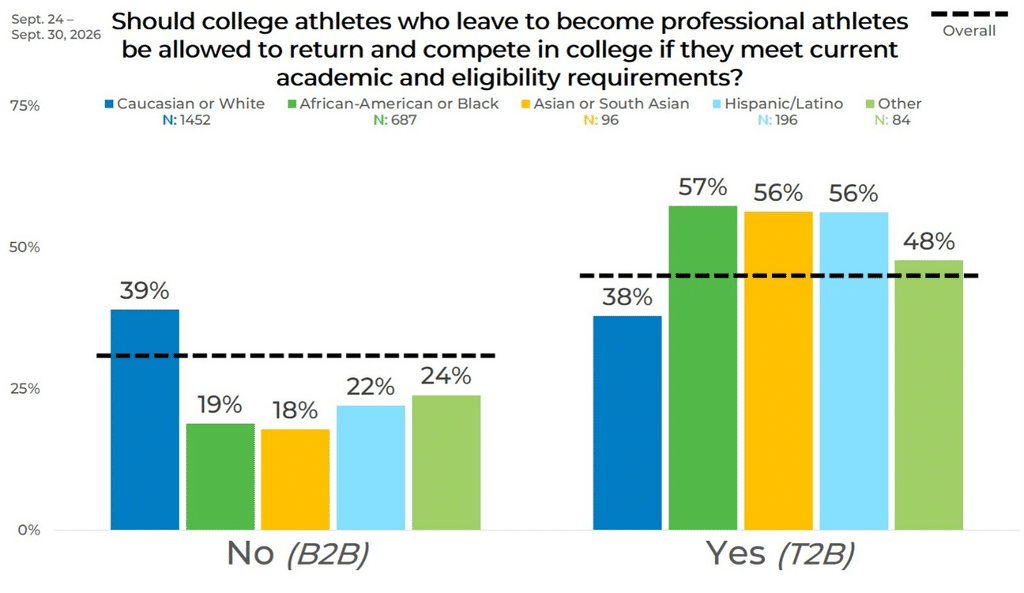
When segmenting the data by ethnicity, we see some definite differences. Caucasians were less likely to support professional athletes returning to compete in college,21 points higher than other ethnicities.
On the flip side, roughly 56% of African Americans, Hispanics, and Asians support professional athletes returning to compete in college, 18 points higher than Caucasians.
Panel
Some of the largest differences in the data appeared when we segmented the data by panel source. There was a 35-point difference in panels A and R between those who do not support professional athletes returning to compete in college.
Of those who do support professional athletes returning to compete in college, there is a 27-point difference, again between Panels A and R. On both sides of the issue, panels E, J, and N were fairly equal to one another.
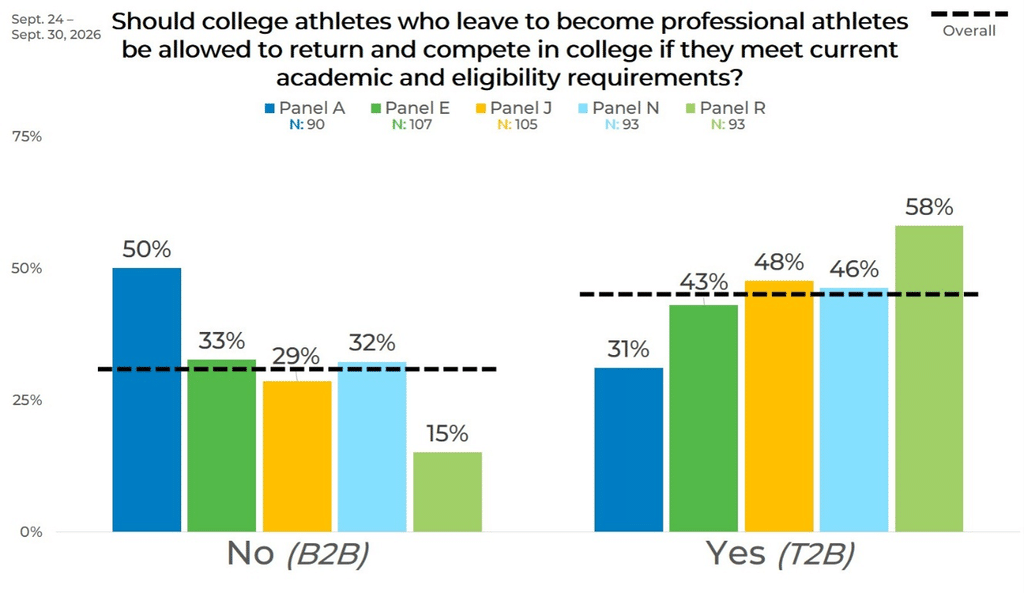
This data highlights the need to blend sample sources strategically. Depending too heavily on like sources can lead to bias in your data and ultimately the wrong decision. To see how EMI can help you, click the button below.