

The Endless Wait: Did TSA Wait Times Really Get Longer?
May 4, 2026
In the Name of National Security: Should AI Work with the Government
May 6, 2026Support on Policy Doesn’t Equal Support on Enforcement Tactics: A Deep Dive into Opinions on Deportation and ICE Tactics

For months, immigration was a focal point of the current administration. It was a focus of the 2024 election and became a key component of domestic policy.
It has also evolved beyond just a stance on illegal immigrants to include feelings about the tactics being utilized by Immigration and Customs Enforcement (ICE) to enforce the crackdown.
Needless to say, it is a hot-button issue for many.
We wanted to get a better understanding of how people were feeling around illegal immigrants and the current tactic ICE has been employing, so we included a series of questions in our recent round of research-on-research.
Let’s dive into what we uncovered. First, we’ll start with people’s views on the deportation of illegal immigrants.
Levels of Support for Deportation
Overall
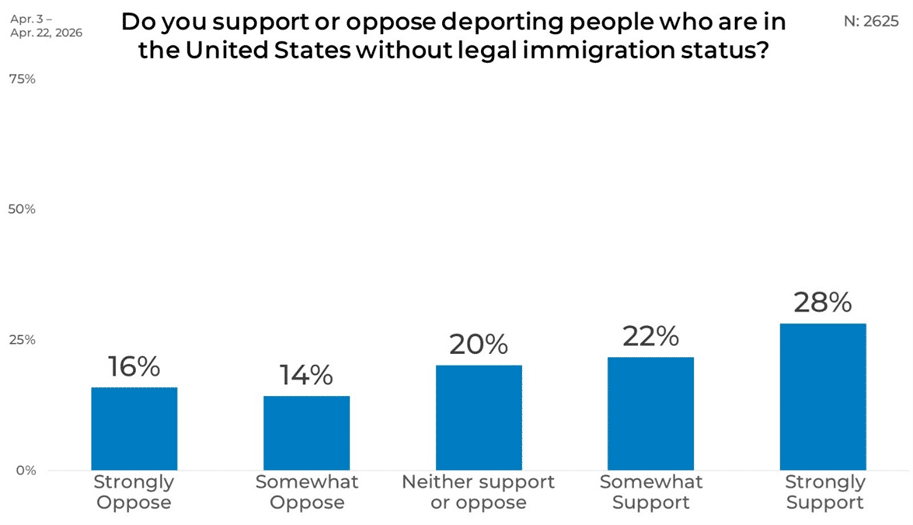
A majority of US consumers (50%) support deporting people in the US without legal immigration status, compared to 30% who do not. This shows that support for the policy concept is there.
Gender
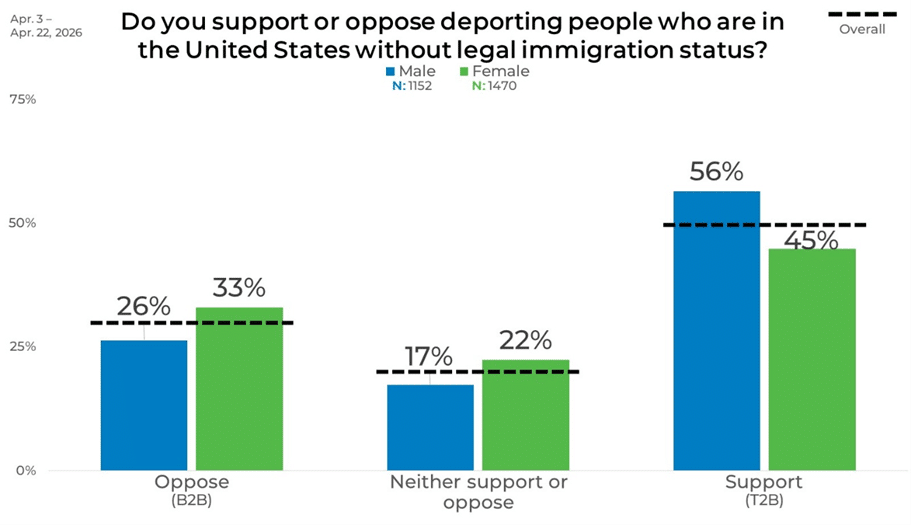
Segmenting the data by gender highlights some modest differences in support and opposition levels. Among men, 56% support deportation, compared with 26% who oppose it and 17% who neither support nor oppose. Women show a more balanced distribution, with 45% expressing support and a higher 33% indicating opposition.
Age
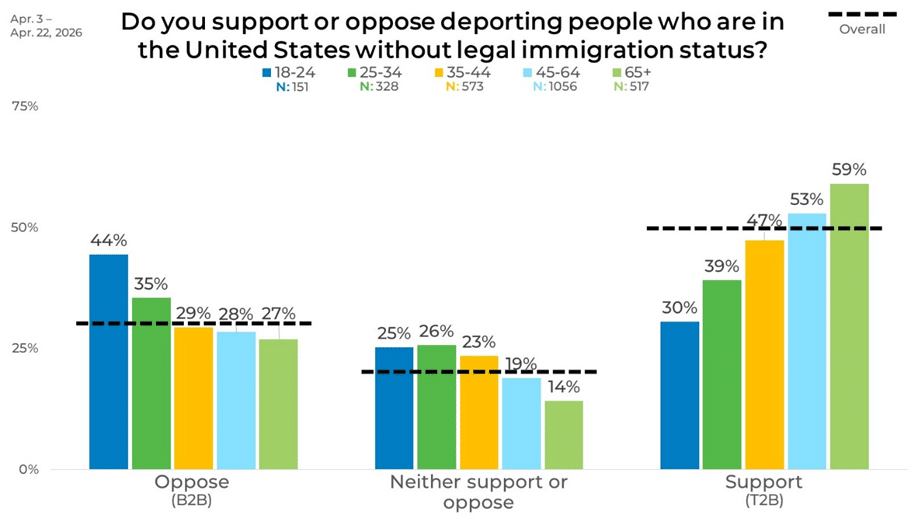
There are some definite trends when looking at the data by age group. Opposition to deportation is highest among consumers aged 18-24, and declines as age increases.
On the flip side, support for deporting people in the US with legal immigration status increases steadily as age increases, topping at nearly 60% with those aged 65+.
Political Affiliation
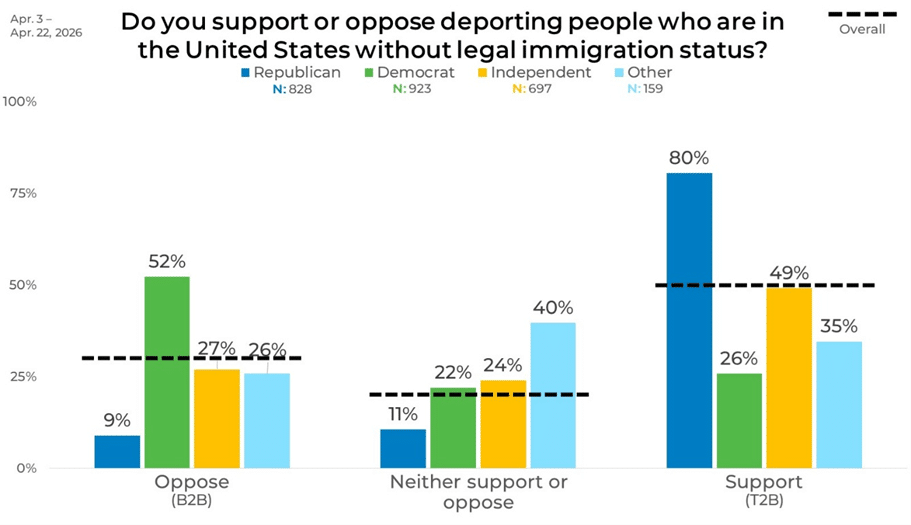
Segmenting the data by political affiliation highlights some large (if not unsurprising) differences in the data. Republicans show the highest level of support, with 80% favoring deportation and only 9% expressing opposition. Democrats display the opposite pattern, with 52% opposing deportation and 26% supporting it. Independents fall closer to the middle, with 49% supporting deportation and 27% opposing it.
Ethnicity
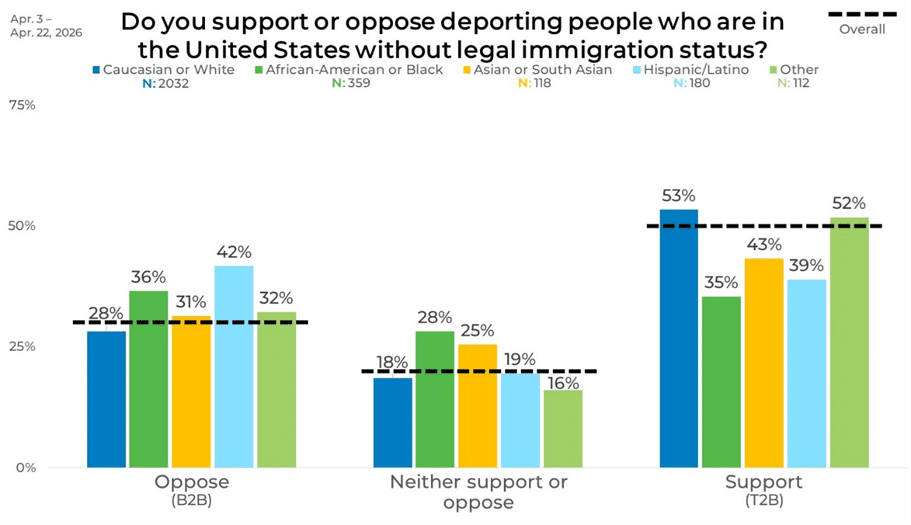
Breaking down the data by ethnicity highlights how opinions can vary by group. R. 53% of Caucasian respondents support deportation compared with 28% who oppose it. African Americans show a more balanced distribution, with 35% supporting deportation and 36% opposing it. Hispanics are the only group that actually oppose deportation at a higher rate than supporting it (42% vs. 39%).
Panel
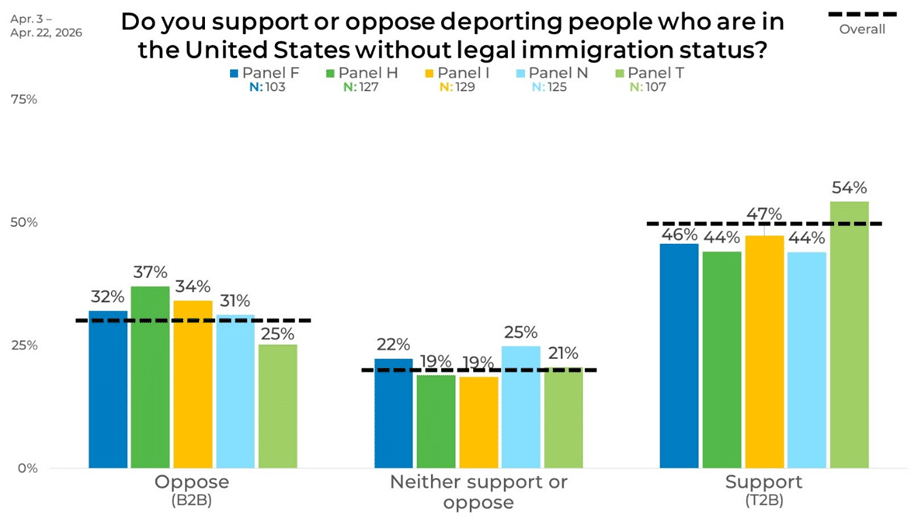
Data from the panel source shows modest differences in deportation support and opposition levels. Panel T shows the highest support at 54% and the lowest opposition at 25%. The largest gap appears in opposition: Panel H reports 37%, compared with 25% in Panel T, a difference of 12 percentage points. Panels F, H, I, and N otherwise cluster closely, with support ranging from 44% to 47%.
ICE Tactics
Now that we have established a baseline for the support and opposition for the deportation of illegal immigrants, let’s explore the level of support this same group of respondents has for the tactics ICE is utilizing to enforce immigration laws.
Overall
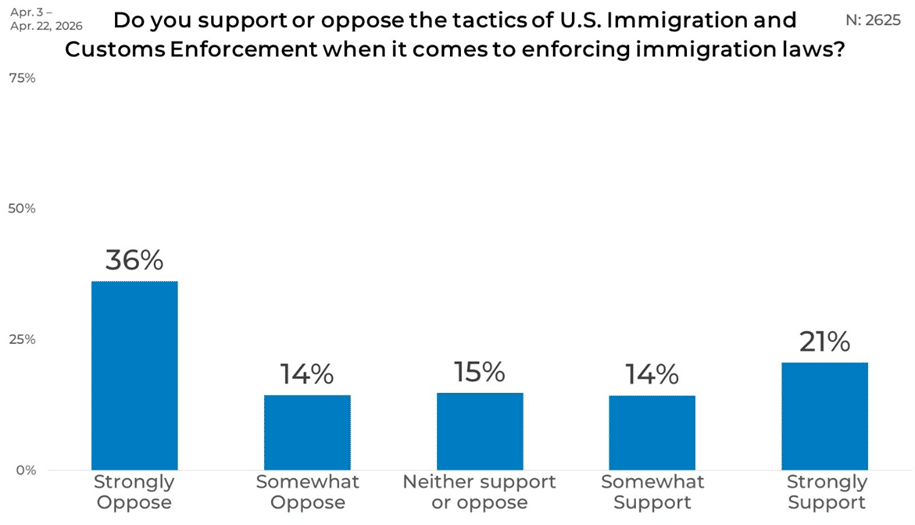
In contrast to the majority of support seen with deporting illegal immigrants, with 36% strongly oppose and 50% opposing overall. This is compared to just 35% who support the tactics that ICE is currently employing. This data shows that support for an issue does not automatically translate into support for the tactics used to enforce the policy.
Gender
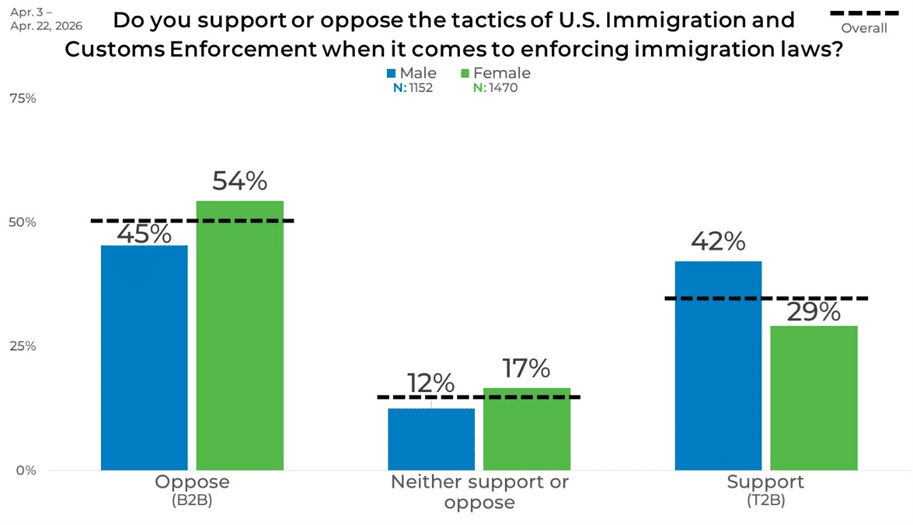
Gender highlights a real difference is levels of support for the tactics being used by ICE. Among men, 45% oppose ICE tactics, while 42% support them. Women report higher opposition at 54%, alongside lower support at 29%. This is a 13-point difference is support, and a 9-point difference in opposition between men and women.
Age
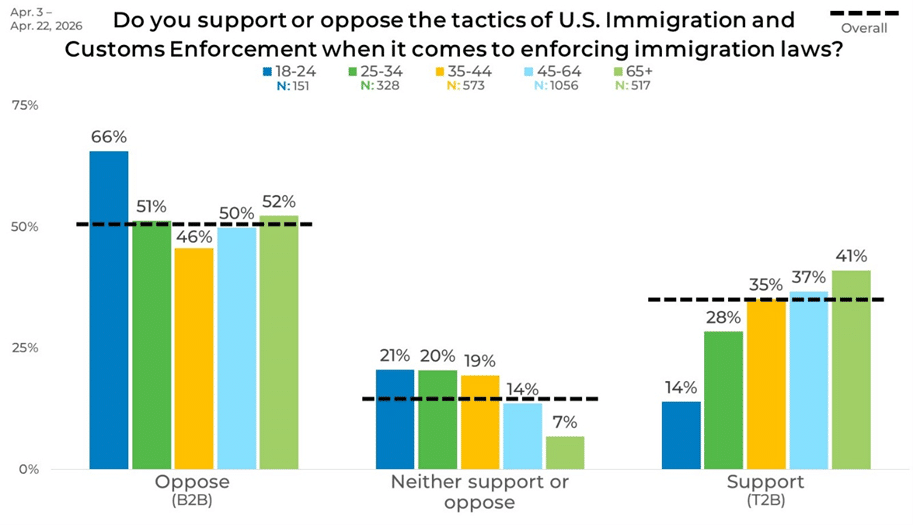
We see the same trend with age groups that we observed with support and opposition to deportation in the data for support and opposition to ICE’s tactics, but with some variations. People’s support for ICE’s tactics increases with age, similar to support for deportation. Opposition declines by about 15 points from those aged 18-24 to those aged 25-34, then remains fairly consistent across the older age groups.
Political Affiliation
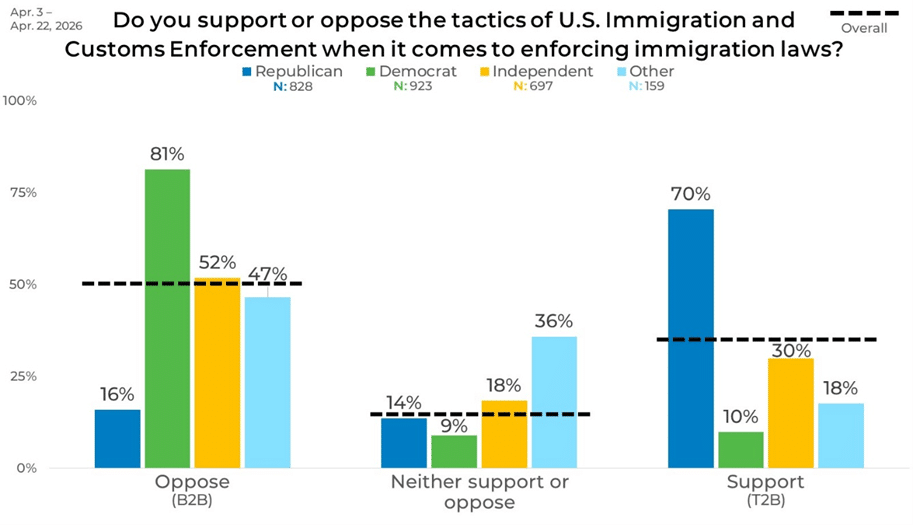
Again, similar to what we observed in the data on deportation support and opposition, we see stark differences in support and opposition to ICE’s tactics by political affiliation. Democrats report the highest opposition level at 81%, with only 10% expressing support. Republicans show the reverse pattern, with 70% supporting ICE tactics and 16% opposing them.
Ethnicity
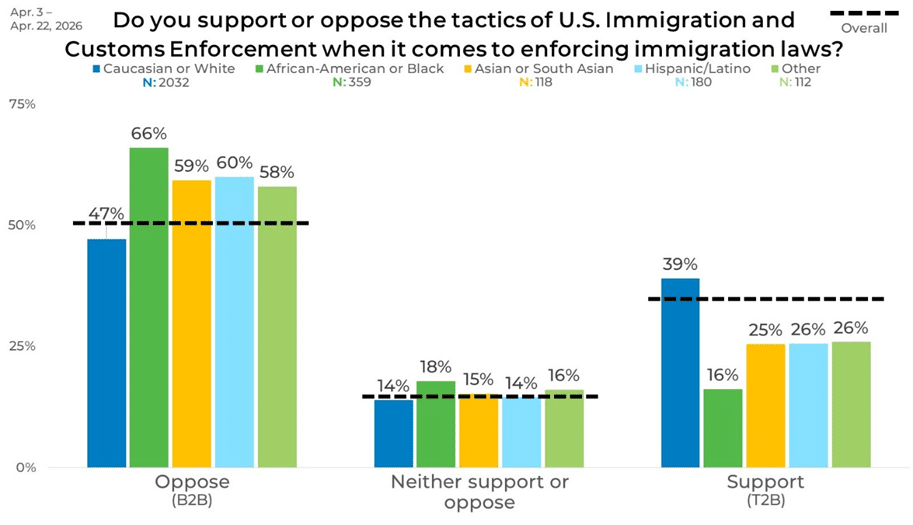
Opposition to ICE’s tactics is at or near 60% across all ethnicities, except Caucasians, where it is between 11 and 21 points lower than other ethnicities. Caucasian’s support of ICE’s tactics is also significantly higher than that of other groups, ranging between 13 and 29 points higher.
Panel
Segmenting the data by panel source shows that opinions can vary widely across panels. Panel H records the highest opposition at 62%, while Panel F shows the lowest at 40%, a difference of 22 points. Support ranges from 28% in Panels H and N to 45% in Panel F, a difference of 17 points.
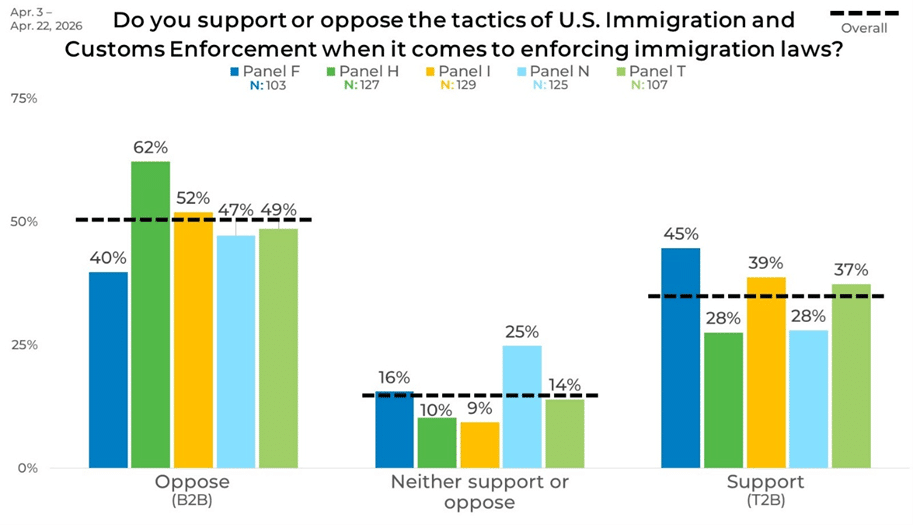
Once again, this data highlights the need to blend panel sources beyond just demographically, but by attitudes and behaviors, to truly get a representative sample. To learn how EMI does it, click the button below.