

From Gulf of Mexico to Gulf of America: A Name Change Dividing a Nation
August 22, 2025
Key Takeaways of CRC 2025 with Andrew Hunt of The Link Group
September 17, 2025
Concerns about mental health stigma continue to play an important role in whether individuals feel comfortable reaching out for support. While some people reject the idea that stigma would hold them back, others admit it remains a barrier. Through our recent round of research-on-research, we have developed a three-part series on public opinion surrounding mental health conversations. To simplify the findings, the detailed five-point response scale has been condensed into three categories: disagree, neutral, and agree. This approach highlights key differences across gender, politics, region, and other groups without losing clarity.
Overall
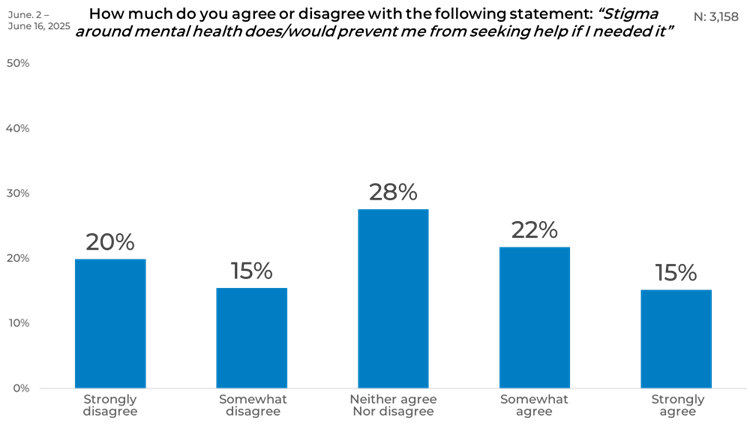
Looking at the total results, opinions are split. Around 35% of respondents said they disagreed with the idea that stigma would prevent them from seeking help, while 37% agreed. The remaining 28% were neutral, showing that many remain uncertain about how stigma would affect their behavior. With nearly equal numbers falling on both sides, the overall population is still divided on whether stigma is a significant barrier.
Gender
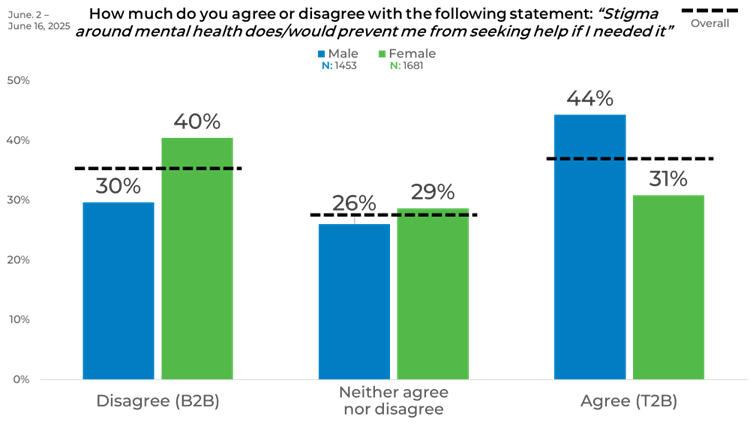
Gender differences were clear. Men were more likely to agree that stigma would prevent them from seeking help, with 44% falling into the agreement categories compared to 31% of women. Women, on the other hand, were more likely to disagree, with 40% saying stigma would not stop them, compared to 30% of men. This indicates that women tend to report fewer barriers from stigma when it comes to accessing mental health care.
Age
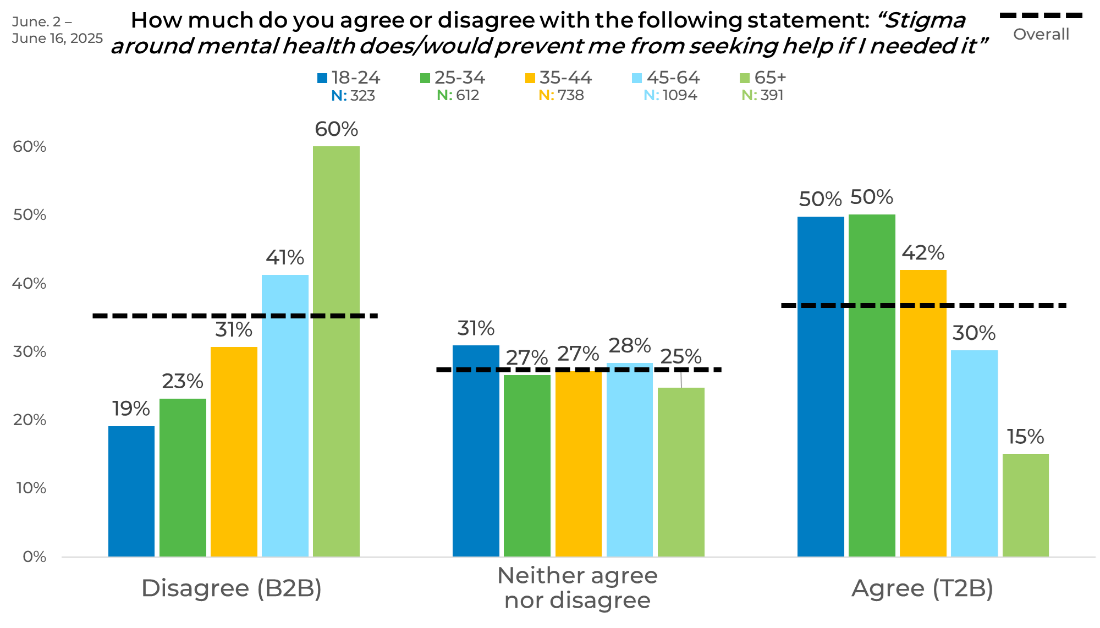
Age, however, revealed sharp contrasts. Younger adults were much more likely to agree that stigma would keep them from seeking help, with half of respondents aged 18–34 falling into this group. Agreement remained high among those 25–34, also at 50%, before starting to taper off in later age brackets. In contrast, only 15% of those 65 and older agreed, while 60% in this age group disagreed. Middle-aged adults, particularly those 35–44 and 45–64, fell in between, reflecting a steady shift with age from higher agreement toward higher disagreement. These patterns display how stigma concerns weigh more heavily on younger groups and ease progressively with age.
Income
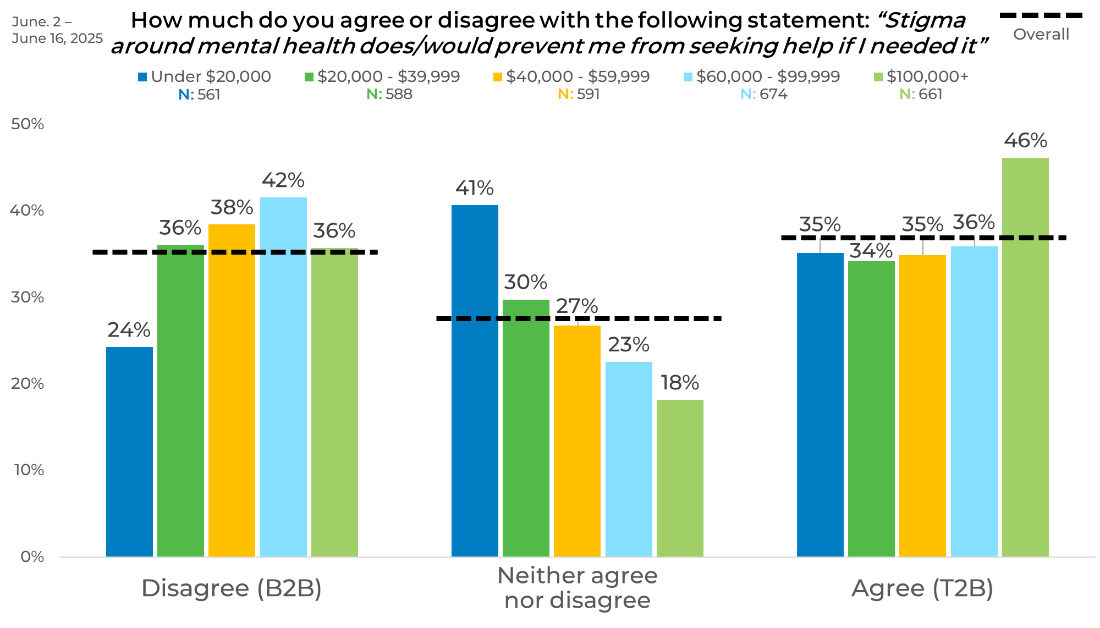
Income played a similar role in shaping responses. Those with lower household incomes were more likely to remain neutral, with 41% of respondents earning under $20,000 choosing neither agree nor disagree. At higher income levels, neutrality dropped, and agreement became stronger. In fact, nearly half (46%) of respondents with household incomes above $100,000 agreed that stigma would prevent them from seeking help, the highest level across income brackets.
Political Affiliation
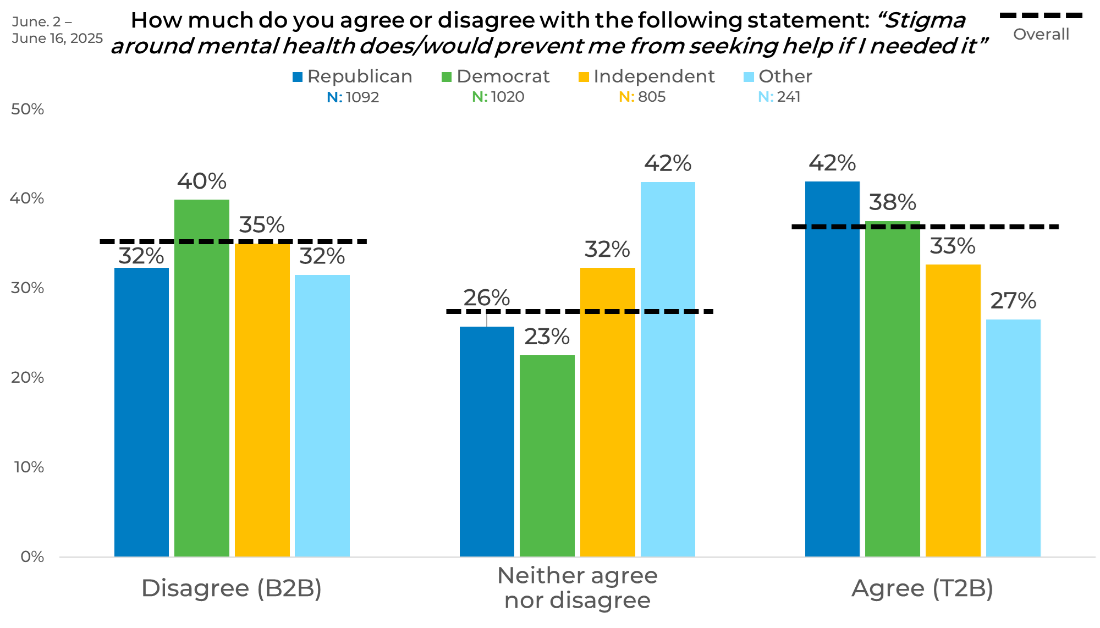
Political affiliation also shaped responses. Republicans and Democrats were similar, with roughly 40% in each group disagreeing with the statement and another third agreeing. Independents were more mixed, with higher neutrality (32%) and lower agreement levels (33%). Respondents who identified with “Other” political affiliations stood out with the highest neutrality at 42%, showing a greater sense of uncertainty about the role stigma plays.
Region
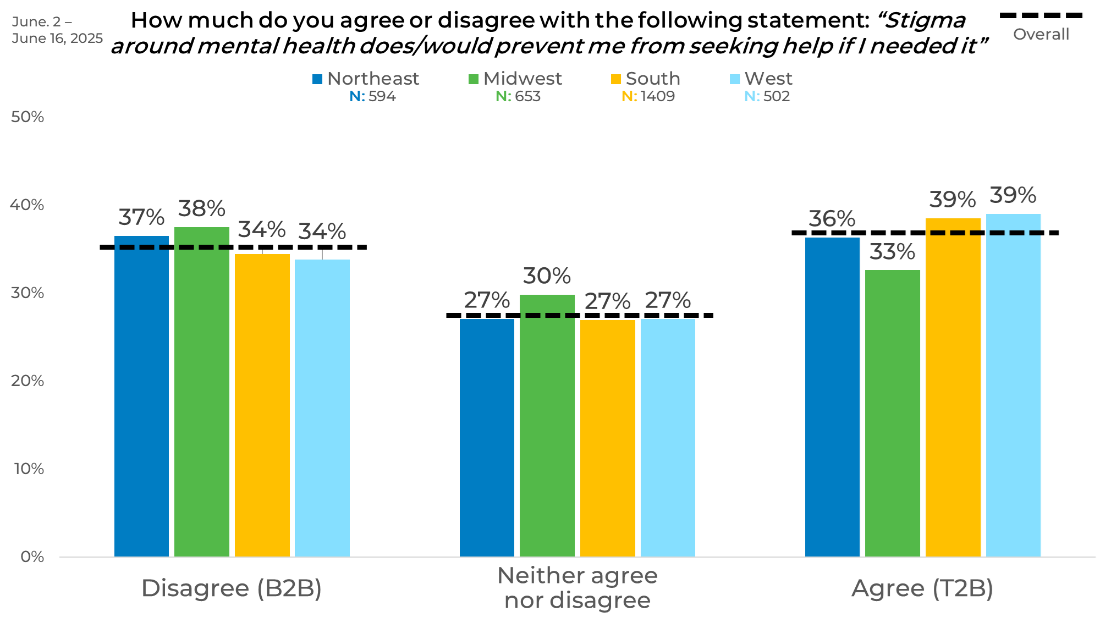
Regional differences were less pronounced but still noticeable. Disagreement was highest in the Midwest at 38% and Northeast at 37%, while agreement was strongest in the South and West, both reaching 39%. These results show that while geography does influence perceptions, differences across regions are relatively modest compared to other demographic factors.
Ethnicity
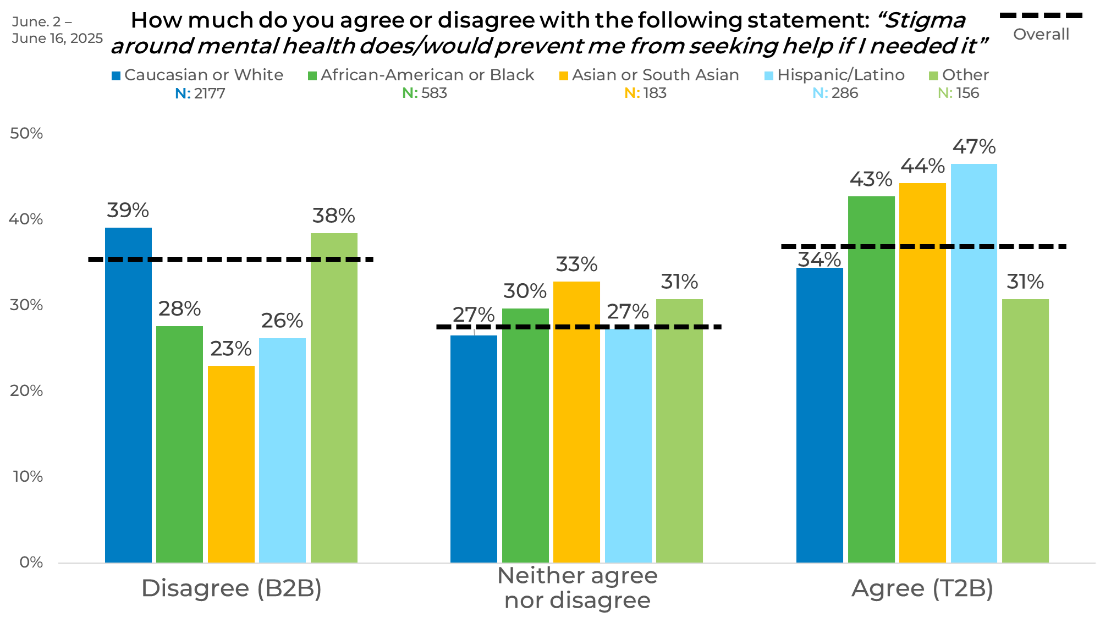
Ethnicity also showed distinct differences. Caucasian respondents leaned more toward disagreement at 39%, while minority groups were more likely to agree. Nearly half of Hispanic/Latino respondents (47%) and 44% of Asian respondents said stigma would prevent them from seeking help, followed closely by 43% of African-American respondents. By contrast, agreement among Caucasians was notably lower at 34%, pointing to a wider gap between groups. These differences highlight how stigma is perceived differently across cultural backgrounds, with minority respondents showing consistently higher agreement levels that stigma remains a barrier.
Panel
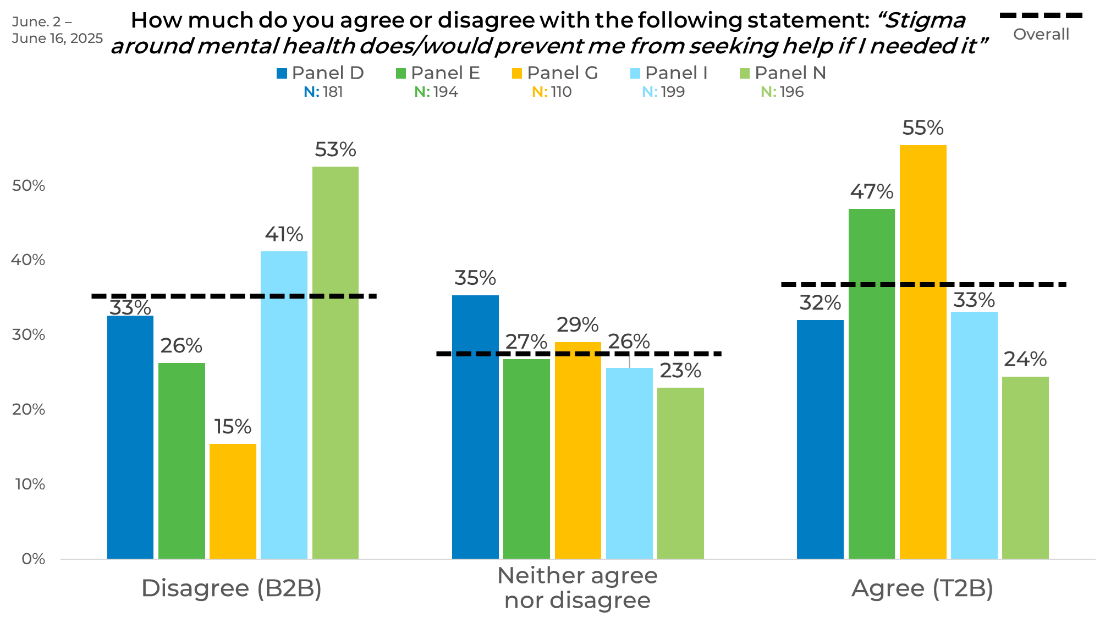
Finally, the panel comparisons reveal the importance of blending data sources. Panel G showed the highest agreement at 55%, while Panel N showed the lowest at just 24%. That 31-point gap represents the single largest difference in agreement between panels. Similarly, disagreement ranged widely, from 15% in Panel G to 53% in Panel N. Without blending across multiple panels, conclusions could easily be skewed depending on which sample is used. Panel blending helps balance these extremes, providing a more reliable overall view of how stigma affects help-seeking behavior.
Learn more about EMI’s strategic sample blending approach by clicking the button below.