

How Startups Can Align Marketing and Sales to Boost Revenue and Close Deals
March 13, 2026
Air travel is considered by many economists to be a forward-looking indicator of consumer spending and economic confidence. We wanted to understand how the recent economic turmoil has impacted travel over the last couple of years, so we asked respondents about it in our most recent wave of research-on-research.
Let’s dive in.
Overall
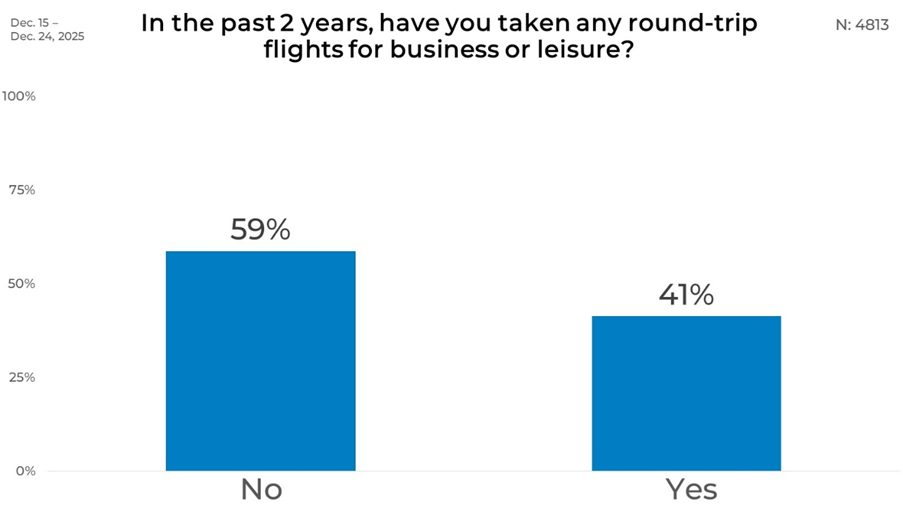
A majority of consumers indicated that they have not taken a round-trip in the last 2 years. This is either business or personal travel.
Gender
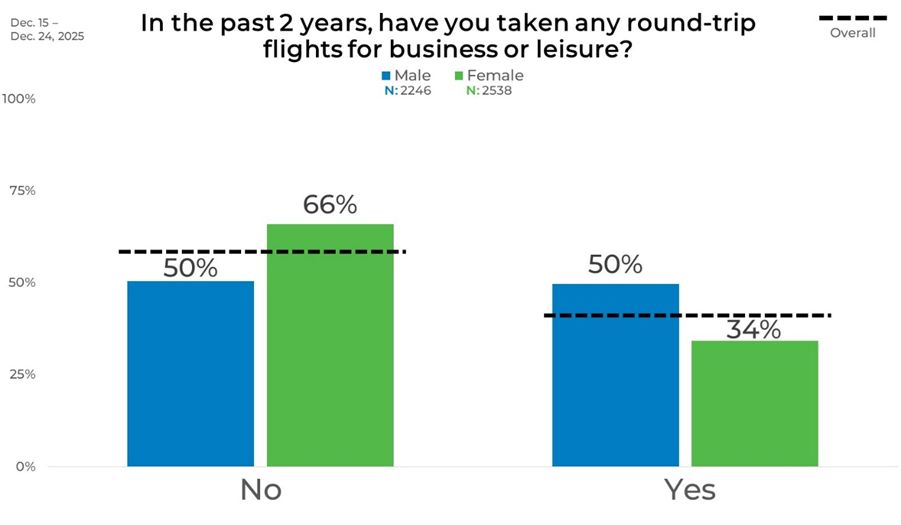
Breaking down the data by gender shows notable differences between men and women. Among men, the results are evenly split: 50% report taking a round‑trip flight in the past two years and 50% say they did not. Among women, the pattern shifts toward fewer flights, with 34% saying they have taken a round‑trip flight compared with 66% who report they have not.
Age
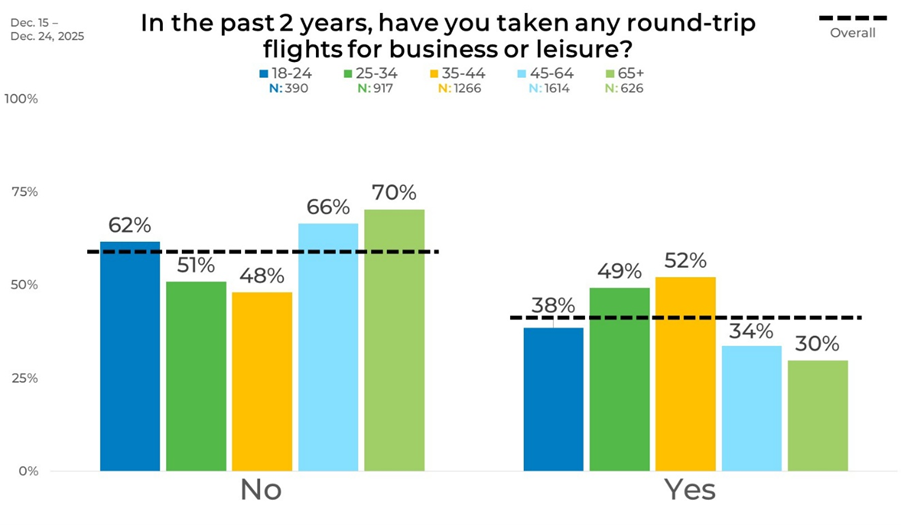
Age seems to have some impact on if an adult has flown in the past two years. A majority of adults aged 35–44 report taking a round‑trip flight in the past two years. Younger adults ages 18–24 show 38% reporting a flight and 62% reporting none. Among those ages 45–64, 34% report a flight, while 66% say they have not. The oldest group, age 65 and over, shows the lowest level of air travel in the data, with 30% reporting a flight and 70% reporting none.
Income
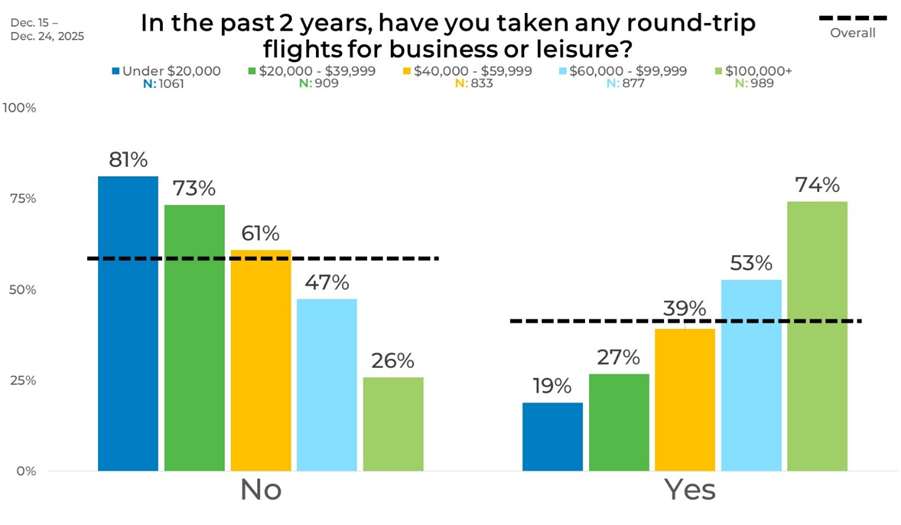
Income level highlights the biggest contracts in air travel. We see a steady increase in air travel with rising income. Among respondents with household incomes under $20,000, 19% report taking a round‑trip flight, while 81% say they have not.
Ethnicity
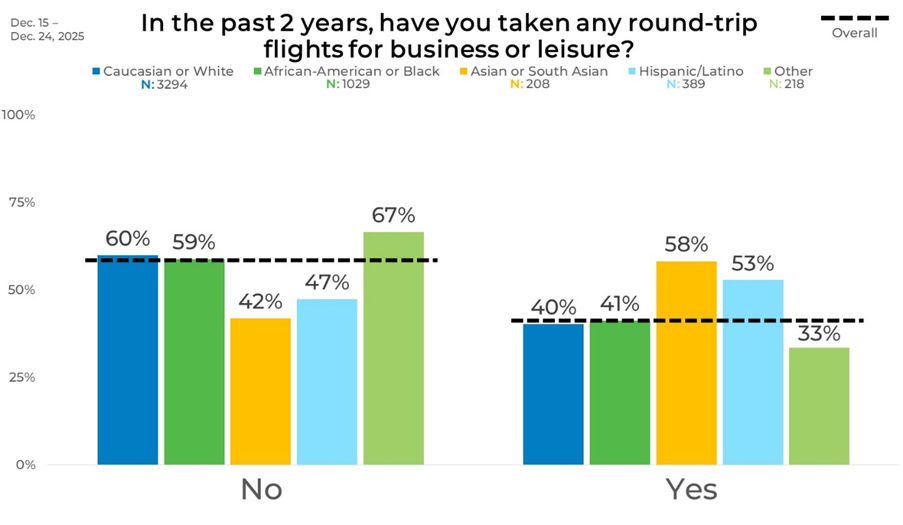
There are some notable differences when looking at the data by ethnicity. 40% of Caucasian report taking a round‑trip flight while 60% say they have not. African Americans reported a similar level. Both Asians and Latinos reported higher levels of air travel.
Panel
Some of the biggest variations were found when we broke the data down by panel source. Panel L shows the highest share reporting a round‑trip flight, with 58% saying they have flown and 42% saying they have not. At the other end, Panel U reports the lowest share of recent flights, with 27% saying they have taken a round‑trip flight and 74% saying they have not, a difference of more than thirty percentage points compared with Panel L. The remaining panels fall between these two points.
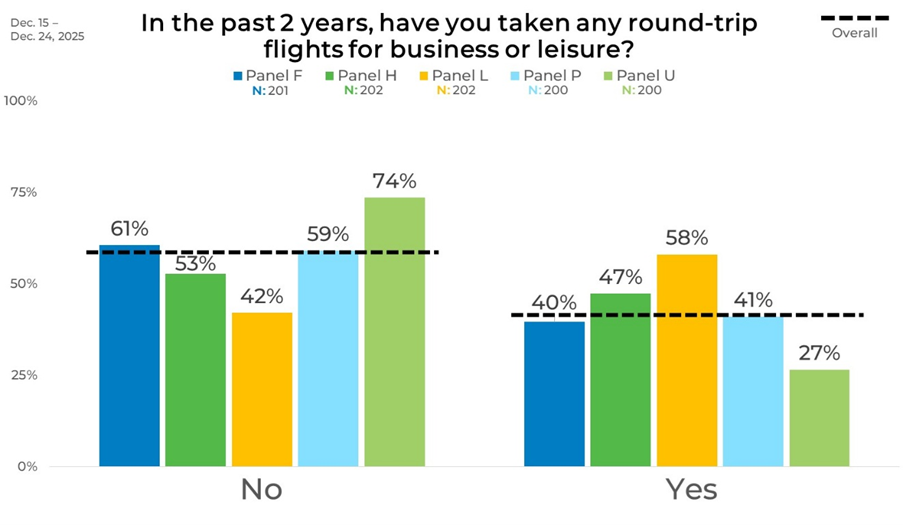
These results highlight the need to strategically blend your sample to ensure you get the most accurate results. Click the button below to learn how EMI can help with your next project.