

Spring Conference Recap
May 7, 2026Are We Losing Respondents?
May 18, 2026
Should a company that provides a product have a say in how that product is used by its buyer? What is the product is an AI, and the customer who wants to use it to potentially create autonomous weapons or systems to conduct surveillance on its civilian population is the government?
This is the question that played out earlier this year when Anthropic tried to set boundaries with the Department of Defense on how its AI systems could be used. The end result was that Anthropic was blacklisted.
In part one of our series on this topic, we explored consumer’s opinions on if AI companies should work with the US government on technology related to national security or defense. In part two, we dive into the specific Anthropic scenario. We asked respondents if they support AI firms placing restrictions on how their technology can be used by the US Government or military.
Let’s dive into the results.
Overall
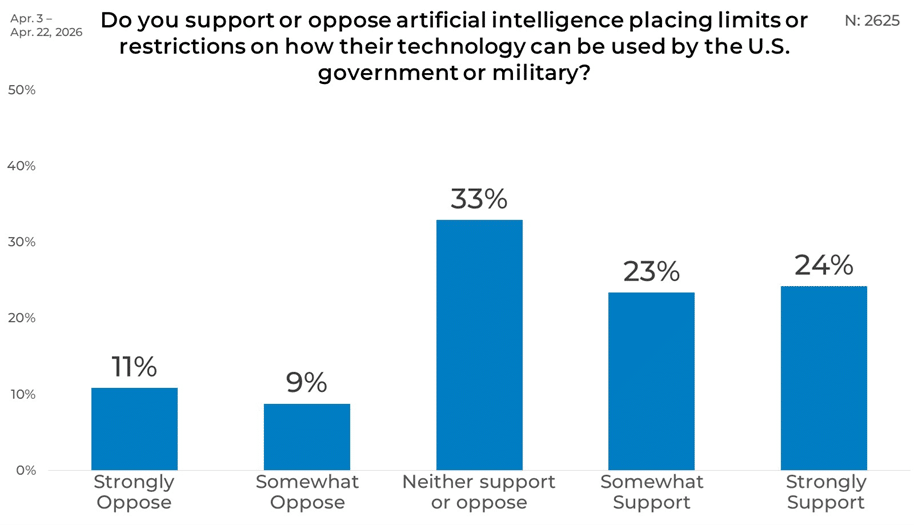
Overall, 47% support artificial intelligence companies placing limits or restrictions on how their technology can be used by the U.S. government or military, including 24% who strongly support it. Opposition is lower, with only 20% opposing it.
Gender
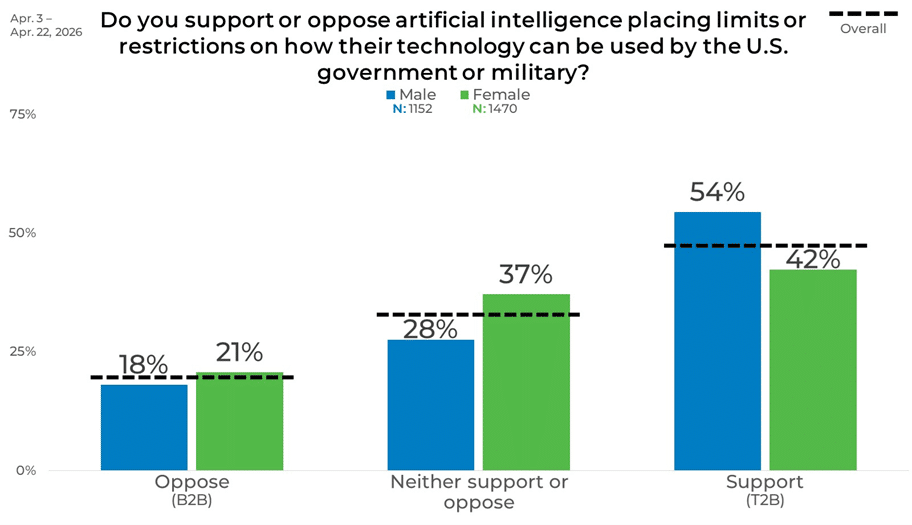
Men are more likely than women to support restrictions on government or military use of AI technology. Among men, 54% support the idea, compared with 42% of women. Opposition is similar by gender, at 18% among men and 21% among women.
Age
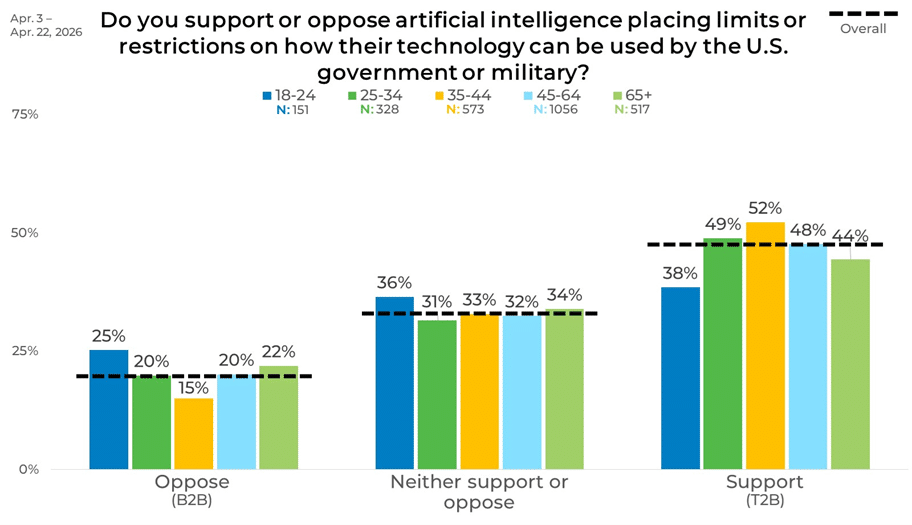
Support for restrictions is higher than opposition across all age groups, but the level of that support varies by age. Adults ages 35–44 show the highest support at 52%, and lowest among 18–24-year-olds at 38%. Opposition to restrictions is highest among 18–24-year-olds at 25%.
Income
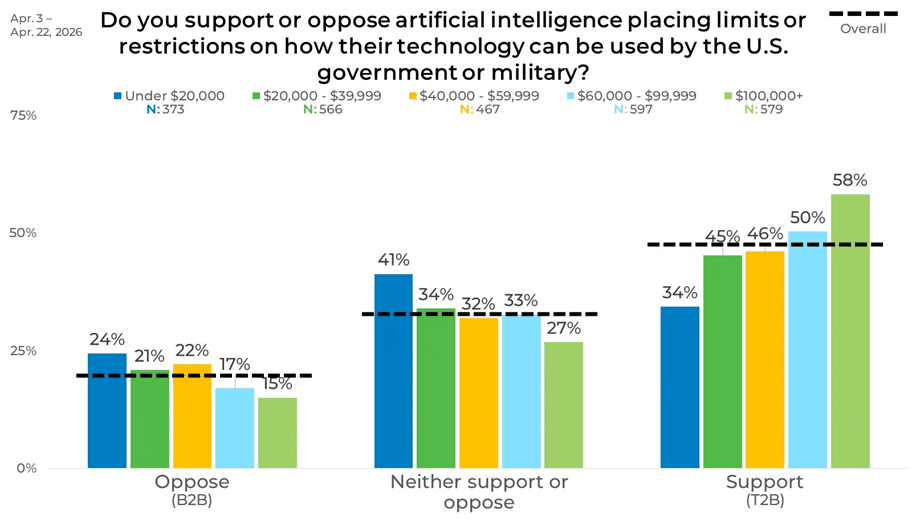
Segmenting the data by income level shows that support for restrictions rises as household income increases. It climbs from 34% with those with a household income of $20,000 or less, to a high of 58% with respondents with a household income of $100,000+.
Opposition moves in the opposite direction, falling from 24% among respondents earning under $20,000 to 15% among those earning $100,000 or more.
Political Affiliation
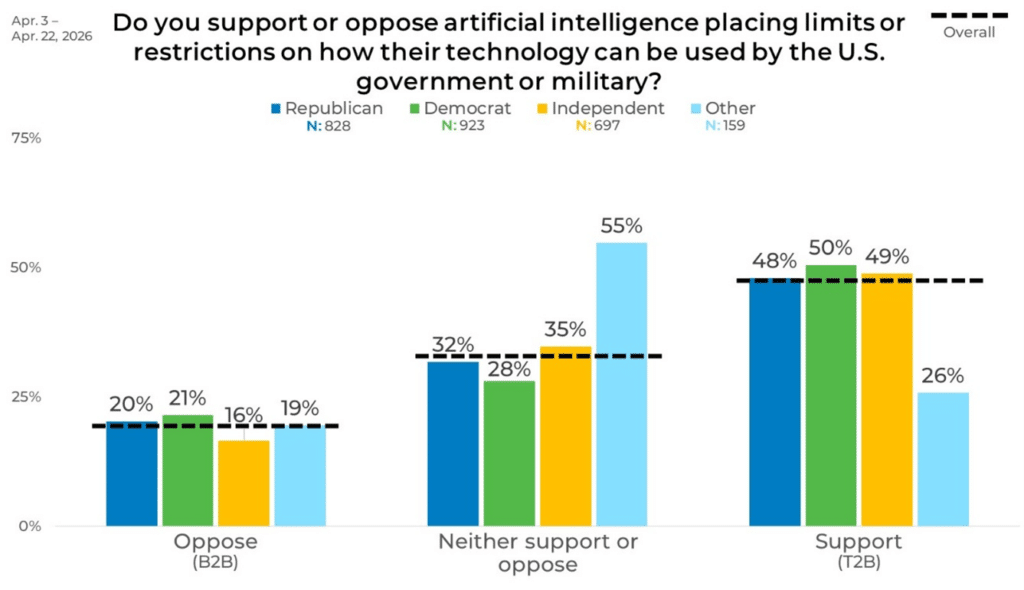
In what seems a rare spot of agreement among political parties, support for restrictions is fairly equal across Republicans, Democrats and Independents. Opposition is also similar among Republicans and Democrats, at 20% and 21%, while Independents are slightly lower at 16%.
Ethnicity
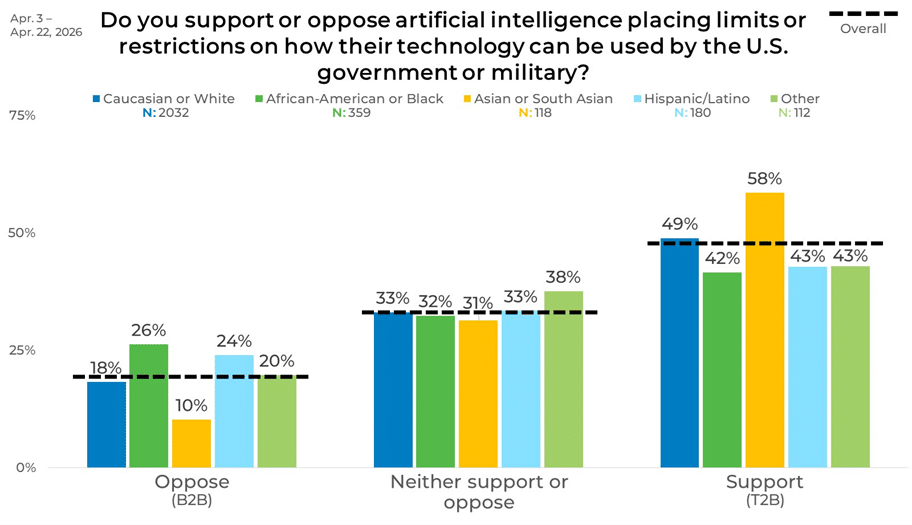
Segmenting the data by ethnicity shows similar support seen across other demographic breakdowns, with Asians reporting the highest support for restrictions at nearly 60%. African American has the lowest level of support at 42%.
Panel
Some of the biggest fluctuations in the data were uncovered when we segmented by panel source. Support is highest in Panel L at 52% and lowest in Panel S at 36%, a 16-point gap. Panel H is also near the top at 50%, followed by Panel P at 47%, while Panel G sits lower at 40%.
The largest panel difference appears in opposition. Panel S has the highest opposition at 31%, more than double Panel L’s 14%, creating a 17-point gap between the two.
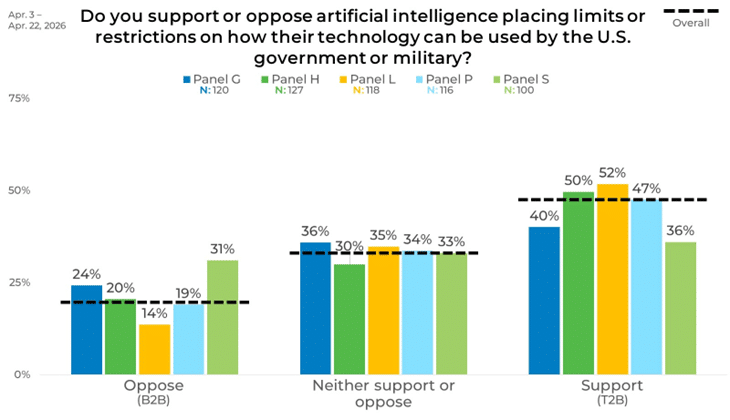
This data highlights how data can differ, not only by demographic, but by panel source. This reinforces the need to strategically blend your panel sources to mitigate any potential source bias in your data.
Click the button below to learn how EMI can help you with your next project.